

Sometimes, the next step in our spiritual growth is not doing more for God, but making room to be with Him.
We live in a world that rarely allows us to be still.
There is always another message to answer, another responsibility to fulfil, another goal to pursue, or another thought demanding our attention. Even when our bodies are resting, our minds are often somewhere else, replaying yesterday's conversations or rehearsing tomorrow's uncertainties.
We have learned how to fill every spare moment. The silence in a car becomes an opportunity to listen to something. A few minutes alone become time to scroll through our phones. Even our mornings can begin with the demands of the world before we have had a moment to remember the One who gave us another day.
And somewhere in the middle of all this movement, our relationship with God can become another thing on our to-do list.
We pray quickly before beginning our day. We read a few verses because we know we should. We ask God to bless the plans we have already made, then hurry into the very life we have asked Him to guide.
But when was the last time we simply stopped?
Not because we were exhausted. Not because life forced us to take a break. Not because we had run out of solutions. But because we wanted to be with God.
The God Who Invites Us to Step Away
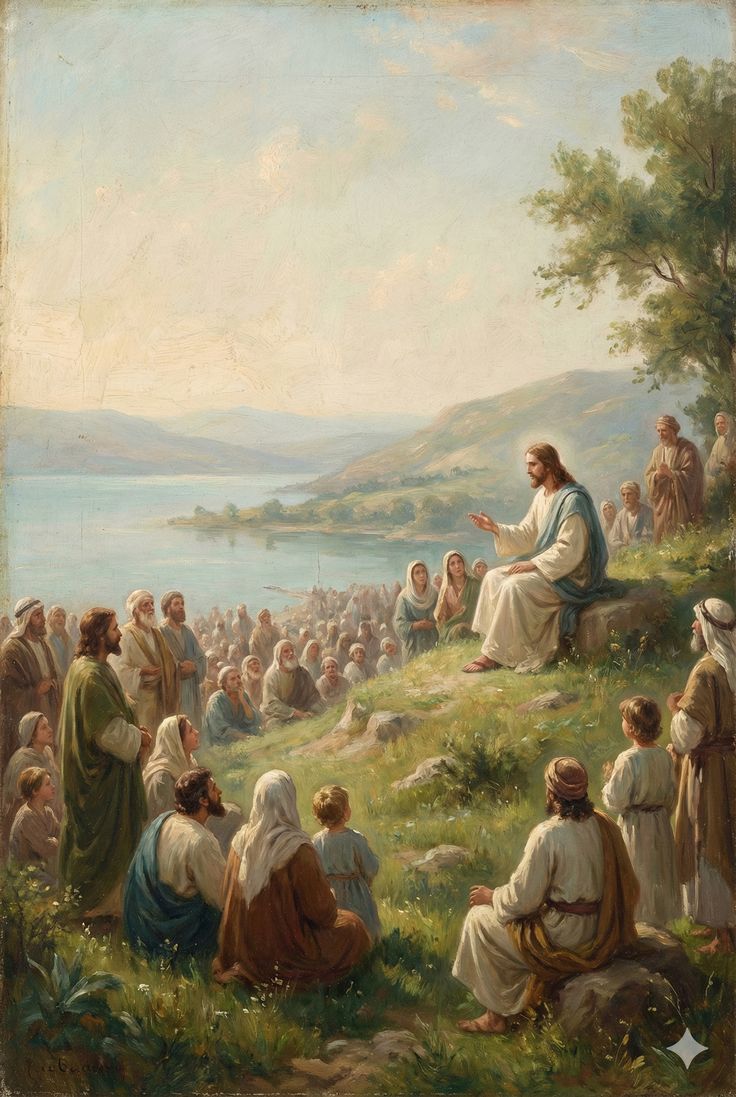
Matthew 5:1 tells us that when Jesus saw the crowds, He went up a mountainside and sat down. His disciples came to Him, and He began to teach them.
There is something beautiful about this scene.
The crowds were there. The needs were there. There were people who wanted to hear Him, people who needed Him, and people who had come seeking something they could not find elsewhere.
Yet Jesus went up the mountain, sat down, and taught. The mountainside became a place of attention, instruction, and encounter. Throughout the Gospels, we also see Jesus withdrawing to quiet places to pray. Luke 5:16 tells us that He regularly withdrew to lonely places and prayed.
Think about that for a moment.
Jesus had people to teach, the sick to heal, the lost to seek, and a mission unlike any other. Yet His life was not defined by constant activity. He made room for prayer.
If Jesus, in His earthly ministry, repeatedly withdrew to be alone with the Father, why do we sometimes behave as though spending time with God is something we can fit in only after everything else is finished?
We often assume that the more spiritually mature we become, the more we should be doing. We want to serve more, know more, help more, and accomplish more.
But spiritual growth is not measured only by how much we do. It is also shaped by how deeply we learn to listen, how willingly we submit our hearts to God, and how faithfully we return to His presence.
Sometimes, stepping away is not an interruption to our calling. It is part of learning to live it.
When Busyness Becomes a Distraction
Busyness is not always a bad thing.
There are seasons when our responsibilities are demanding, when our families need us, when work requires our full attention, and when serving others means giving generously of our time.
The problem begins when being busy becomes our permanent condition, leaving no room for anything that cannot be measured, completed, or checked off a list.
We can become so occupied with the work of living that we forget to nurture the life within us.
We can spend our days speaking about God without spending meaningful time with Him. We can become involved in Christian activities while neglecting the quiet relationship that gives those activities their purpose.
And sometimes, our busyness is not simply the result of having too much to do. It is a way of avoiding what happens when everything becomes quiet.
Stillness can reveal things we would rather not face.
It may bring our worries to the surface. It may remind us of an unresolved hurt, a fear about the future, or a decision we have been postponing. Without the noise of constant activity, we may begin to recognize how tired our hearts have become.
So we fill the silence again.
We tell ourselves that we will pray when things settle down, that we will spend time in Scripture when life becomes less demanding, or that we will seek God more intentionally once we have dealt with the problems in front of us.
But what if the very things that make us feel we have no time for God are the things we most need to bring into His presence?
We do not have to arrive before God with our minds perfectly calm or our hearts completely settled. We can come distracted, anxious, overwhelmed, and uncertain.
The invitation is not to become perfectly still before approaching God.
It is to approach Him so that, little by little, we can learn to be still.
Making Room Is an Act of Trust
There is a reason slowing down can feel uncomfortable.
When we stop, we are reminded that the world continues to turn without our constant involvement. The messages can wait. The work can remain unfinished for a little longer. Not every question needs an immediate answer.
For those of us who find security in planning, productivity, or having things under control, this can be difficult.
We may tell ourselves that we are simply being responsible. Yet sometimes, beneath our constant activity, there is a quiet fear that if we stop doing, something important will fall apart.
Psalm 46:10 says, “Be still, and know that I am God” (NIV).
This is more than an invitation to enjoy a peaceful moment. It calls us to remember who God is and who we are not.
We are not the ones holding the universe together. We are not responsible for knowing every answer, predicting every outcome, or controlling every detail of tomorrow.
We have responsibilities, certainly. We must work faithfully, care for others, make wise decisions, and do what God has entrusted to us. But we are not God, and we were never meant to carry the burden of being in control of everything.
Making room for God is an act of trust because it reminds us that His work does not depend entirely on our frantic efforts.
When we set aside time to pray, we acknowledge that our plans need His wisdom. When we sit with Scripture, we allow His truth to challenge our assumptions. When we remain quiet before Him, we make space to recognize the fears and desires that have been directing our decisions.
We begin to move from simply asking God to accompany us through our plans to allowing Him to shape the way we live.
And that difference matters.
Creating a Mountain in the Middle of Ordinary Life
Most of us cannot disappear into the mountains whenever we need spiritual renewal.
We have jobs, families, commitments, deadlines, and ordinary responsibilities that do not pause simply because we want a quieter life.
But the principle of making room for God does not require us to escape our lives. It asks us to approach our lives differently.
Perhaps your mountainside is the first fifteen minutes of your morning, before the notifications begin.
Perhaps it is a quiet walk without headphones, allowing your thoughts to settle as you speak honestly with God.
Perhaps it is sitting with one passage of Scripture instead of rushing through several chapters, asking what the words reveal about God's character and what they invite you to change.
Perhaps it is pausing in the middle of a demanding day to pray before reacting to a difficult situation.
These moments may not look extraordinary. They may not produce immediate answers or dramatic feelings. Some days, your mind may wander repeatedly. Other days, you may feel as though you have nothing meaningful to say.
That does not make the time wasted.
A relationship grows through presence, attention, honesty, and returning again and again. Our relationship with God is not an exception.
We do not need to turn stillness into another achievement to pursue. We do not need to judge our time with God by how peaceful we felt, how many insights we discovered, or how successfully we avoided distractions.
We simply need to keep making room.
Not to earn God's attention, but because He is worthy of ours.
What If We Stopped Rushing Past His Presence?
Imagine how differently we might approach our days if we did not begin every morning by immediately surrendering our attention to everything demanding it.
Imagine if, before asking God to bless our plans, we first allowed Him to remind us of what matters.
Imagine if we learned to pause before responding in anger, pray before making decisions out of fear, and return to Scripture when the opinions around us became louder than the truth we knew.
Our circumstances might not change overnight. Our responsibilities would still be waiting. We would still encounter difficult people, unexpected disappointments, and unanswered questions.
But we might begin responding to these things from a different place.
Instead of allowing urgency to dictate every decision, we could learn to seek wisdom. Instead of reacting to every fear, we could learn to bring our concerns to God. Instead of allowing the loudest voices around us to shape our priorities, we could become more attentive to His truth.
The purpose of stillness is not to create a life without noise.
It is to cultivate a heart that knows where to turn when the noise returns.
And perhaps that is one of the most important lessons we can learn: we do not have to wait for life to become quiet before we make room for God.
We can begin right here, in the middle of our unfinished work, our crowded schedules, and our ordinary days.
We can stop.
We can listen.
We can come near.
Because a life lived with God is not built only through the things we accomplish in His name. It is also built through the time we willingly spend learning His heart.
Questions for Personal Reflection
- What occupies most of my attention throughout the day, and what does that reveal about my priorities?
- Do I sometimes use busyness to avoid the thoughts, fears, or questions that surface in stillness?
- What practical, realistic time can I set aside this week to be with God without rushing?
- Is there an area of my life where I need to stop trying to control every outcome and begin seeking God's wisdom?